

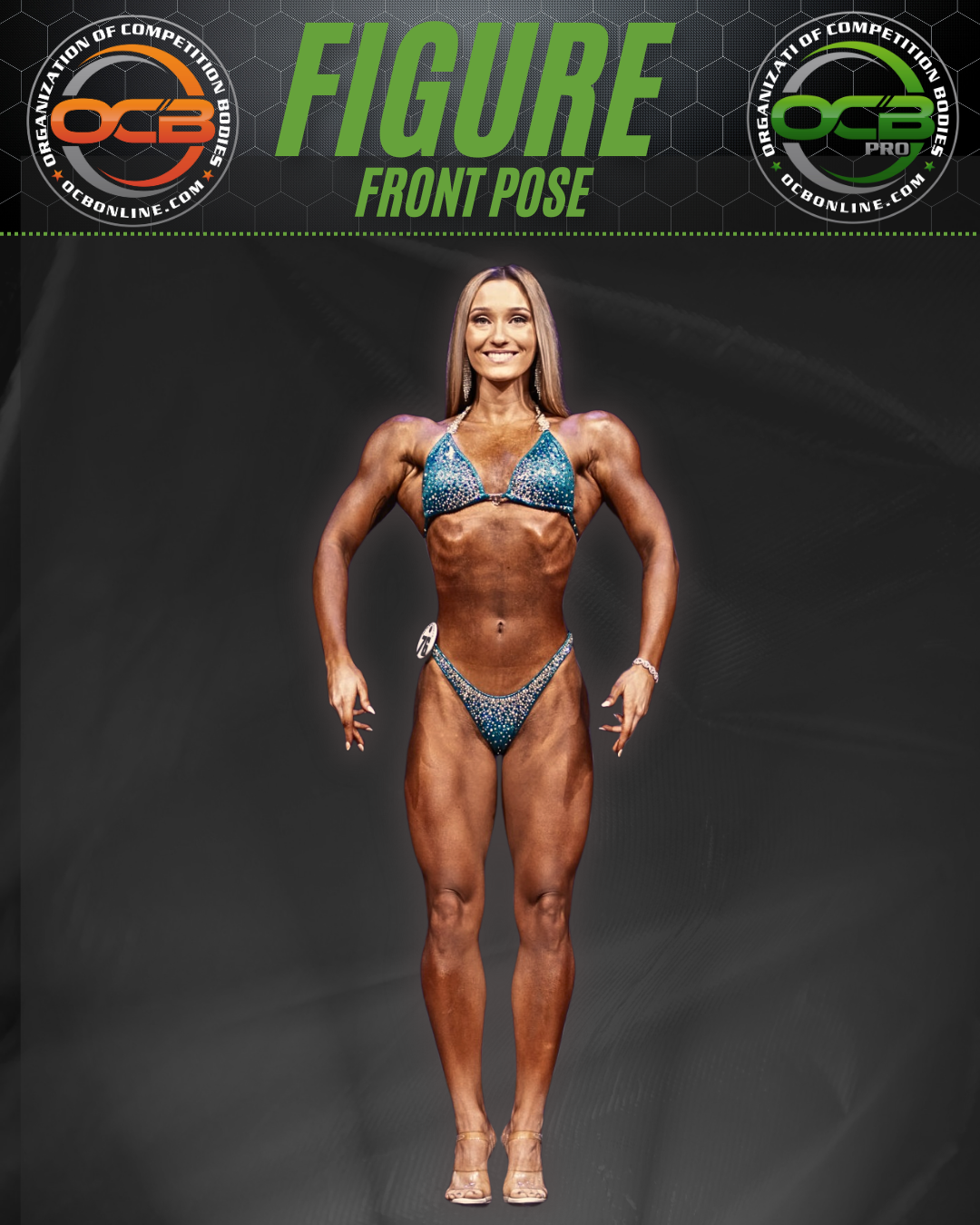
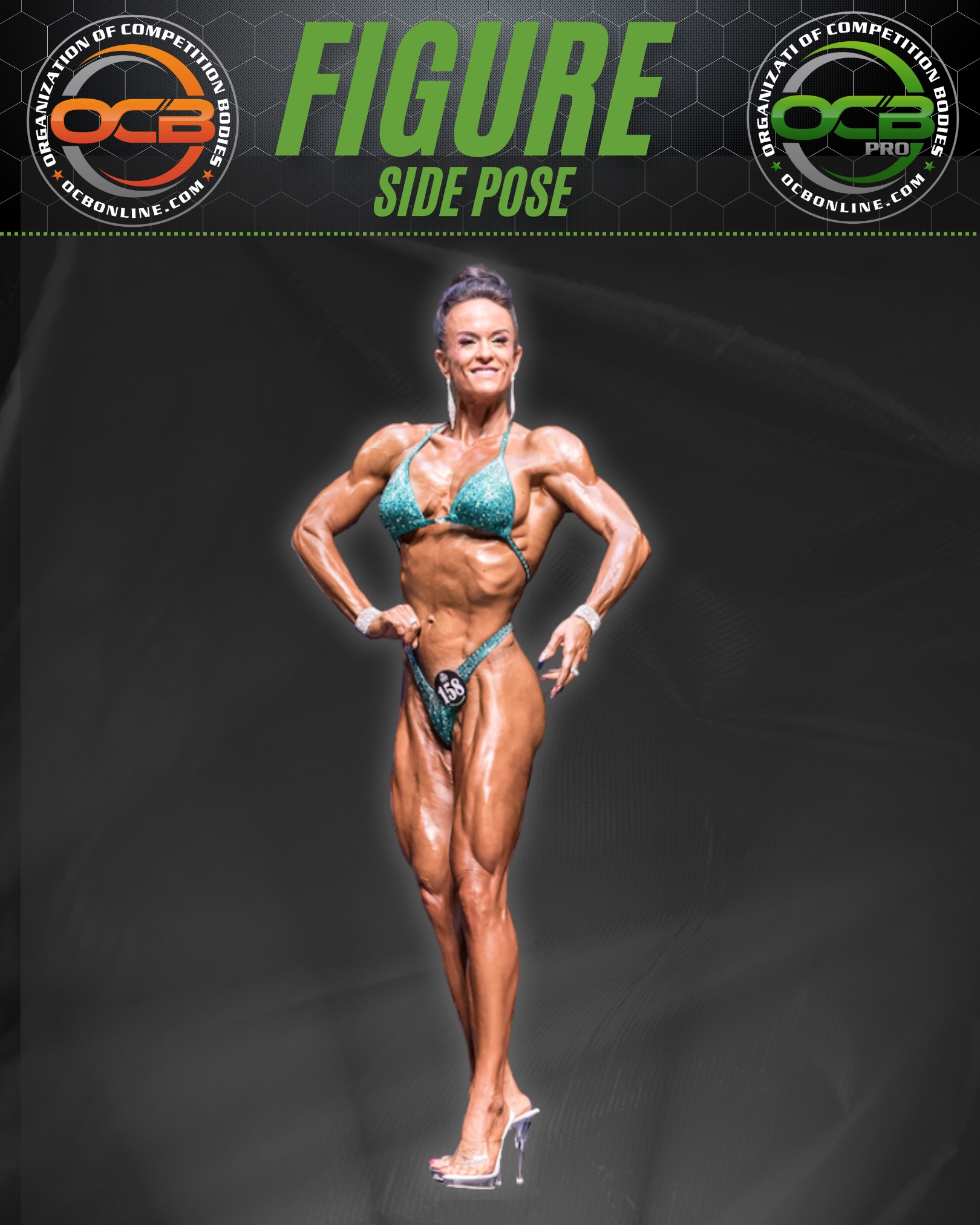
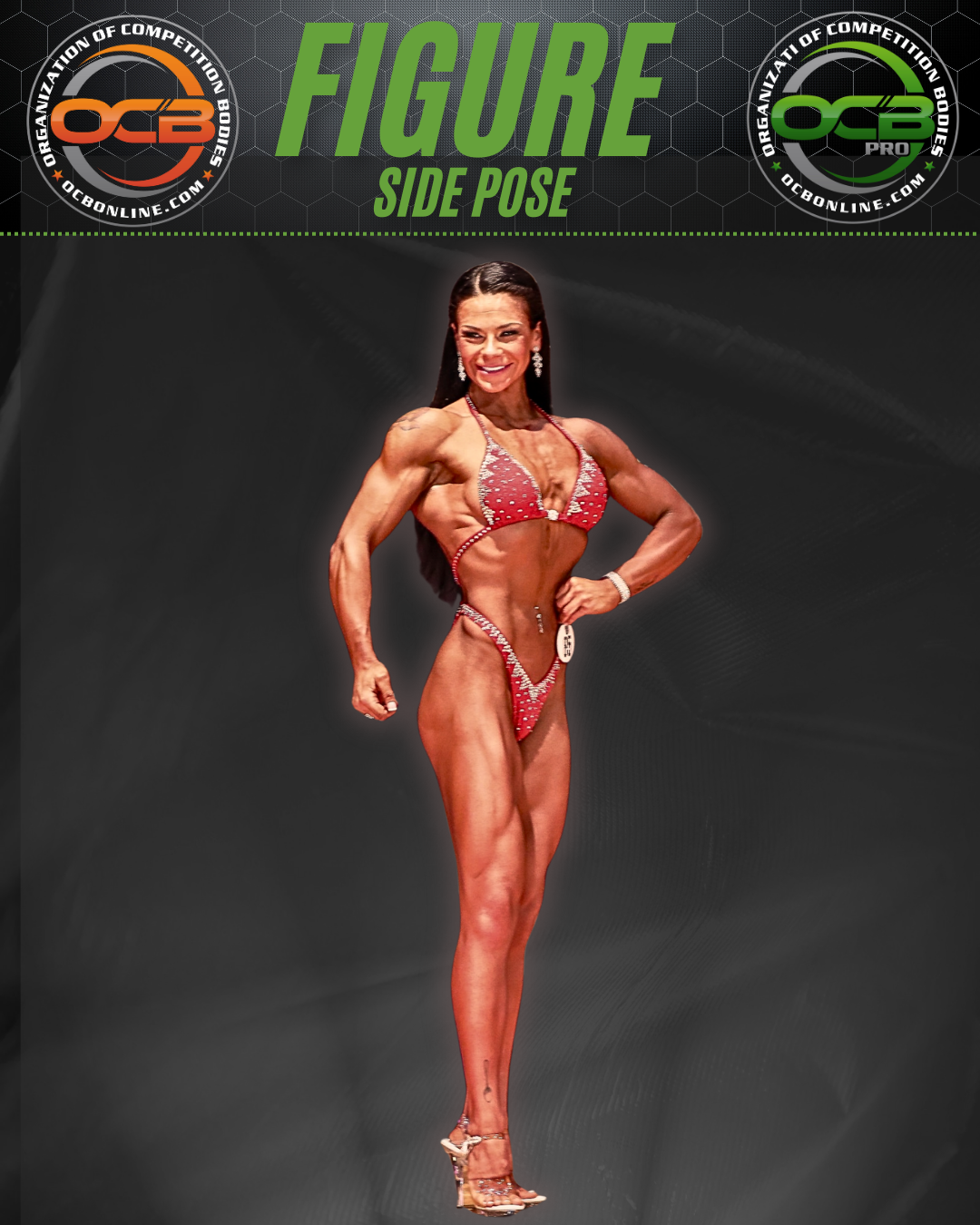
Figure competitions consist of 2 parts: Group Comparisons, which are scored and Individual Presentations, which are not scored.
Judging for Figure is based on symmetry, muscularity and conditioning. Leanness and muscle development are expected in figure, but NOT to the same degree as presented in Women’s Physique. Figure competitors should have a V-tapered structure, which begins with capped shoulders, a wide muscular back, and a small waist. Glutes and hips should be full and muscular. Quadriceps should have a thick sweep, visible cuts, and muscle separation, but not cross-striated. Hamstrings and calves should be visible, full and muscular. In general, figure competitors should have a healthy appearance, be lean, but not overly striated or grainy. They should not display deeply drawn-in faces or stringy-looking muscularity (an emaciated look), or less shapely muscularity due to muscle glycogen depletion.
Figure Symmetry: Balanced muscle proportion from top to bottom. Capped shoulders, wide lats, small waist, full round, glutes, sweeping quads, visible hamstrings and calves.
Size: Muscular, proportioned, full muscle bellies from top to bottom.
Definition: Lean, visible separation/cuts in quads, hamstrings, abdominals, and back. Not grainy or overly striated muscles, with the exception of the shoulders. With the degree of leanness required of natural figure athletes, shoulder striations are common and are acceptable. Athletes should not display deeply drawn-in faces, a stringy-looking muscularity (an emaciated look), or less shapely muscularity due to muscle glycogen depletion.
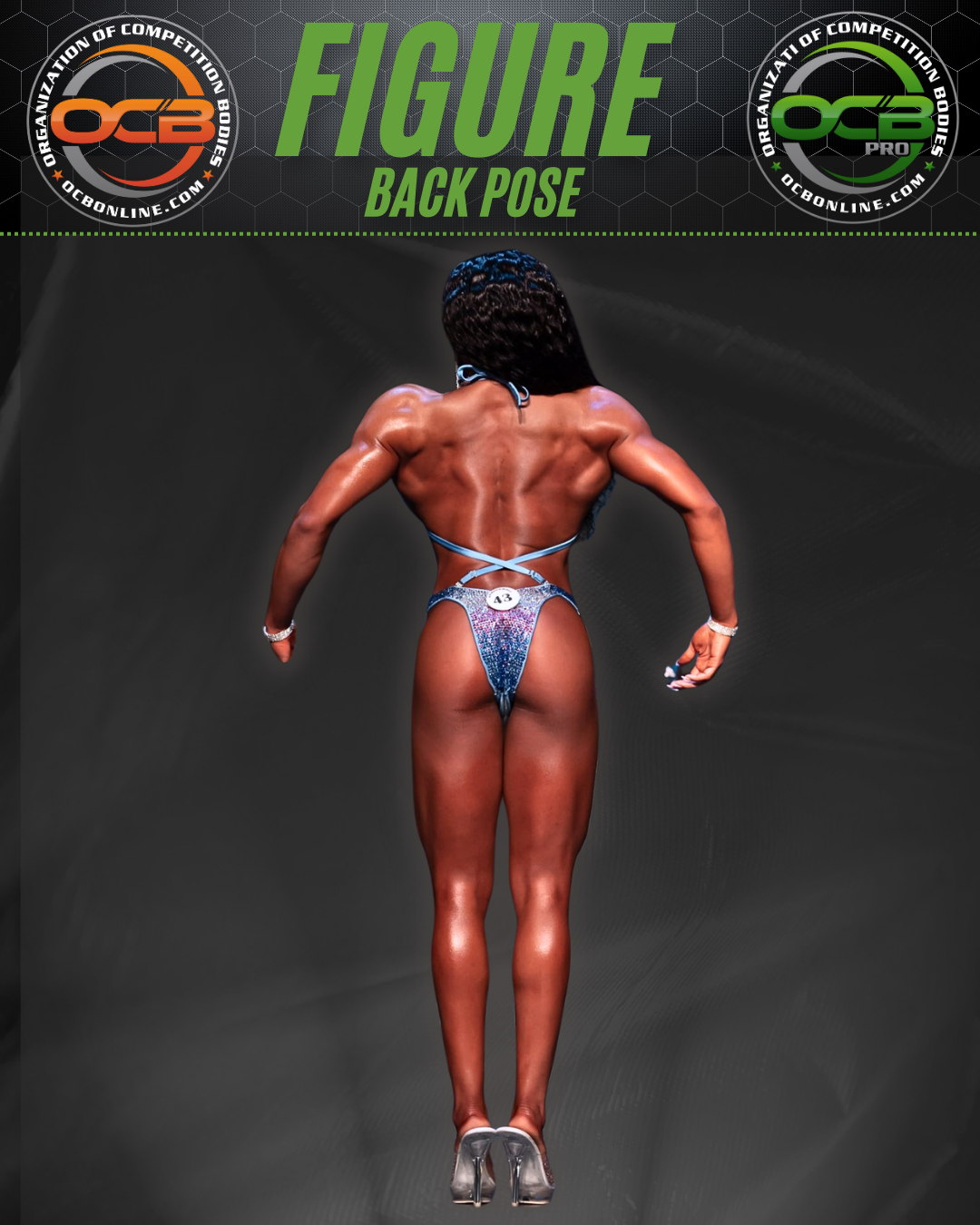
Athletes will enter the stage together as a class, stand on a pre-marked line, and immediately get into their front relaxed position. The head judge will call for competitors to “quarter turn to the right.” Competitors will be given time to transition and be viewed by the panel in 4 poses: front, side, rear, and side. The head judge will continue with quarter turns until the entire lineup has been scored by the judges. In order to properly assess figure athletes, it is imperative that they consistently pose so their features are on display to the judges with every quarter turn. Not performing poses in the manner specified may result in lower scoring from judges.
At any time, the head judge may request competitors switch places on stage. Athletes should listen for their number, raise their hand if called, and look for the other competitor to raise their hand. When called, competitors should then walk respectfully over to the other location and resume their posing position. Please note that in the OCB, an athlete’s location on the stage is not an indicator of placement.
When in the back pose, figure athletes should pull long hair aside, to avoid obstructing view of the back in the rear pose.


The individual presentation portion is the stage walk. The individual presentation is not factored into placement scoring. At the promoter’s discretion, walks may be performed in a “I” or “T” formation. Some events will use house music, while other events may allow competitors to submit their own music. If you are not sure which type of walk or music offerings are being offered at a particular event, read the event registration details or contact the event promoter directly.
“I” Walk – Competitors walk directly to the rear center of the stage, which will be marked with an “X.” They will pause briefly in a pose of their choice, then walk directly to the front center stage, which will also be marked with an “X.” Here they will perform quarter or half turns with poses of their choice to provide a full view of their physique. They will then exit the stage. “I” walks are performed to house music. Athletes should be prepared to enter and exit from either side of the stage as different venues have different stage layouts.
“T” Walk – Competitors will be given 30-60 seconds (times will vary depending on the event) to pose and perform to music. Competitors will walk directly to the rear center of the stage, which will be marked with an “X.” They will pause briefly in a pose of their choice, then walk directly to front center stage, which will also be marked with an “X.” Here they will perform quarter or half turns with poses of their choice to provide a full view of their physique. To form the “T,” competitors will then walk to the left or right corner of the stage where there will be an “X” marked for them to pause and strike a pose. They will then cross to the other corner of the stage, stop at the “X” and hit another pose. The competitor will then return to the center “X” on the stage where they may hit another pose and exit. Athletes should be prepared to enter and exit from either side of the stage as different venues have different stage layouts.
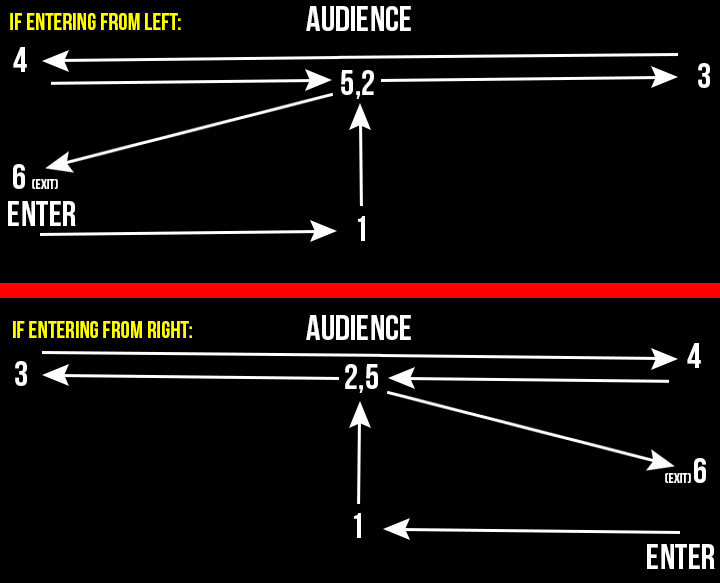
Sample path for “T” walk style individual presentations.
Watch a figure class being judge followed by “I” walk style individual presentations.